
The Logistics Group
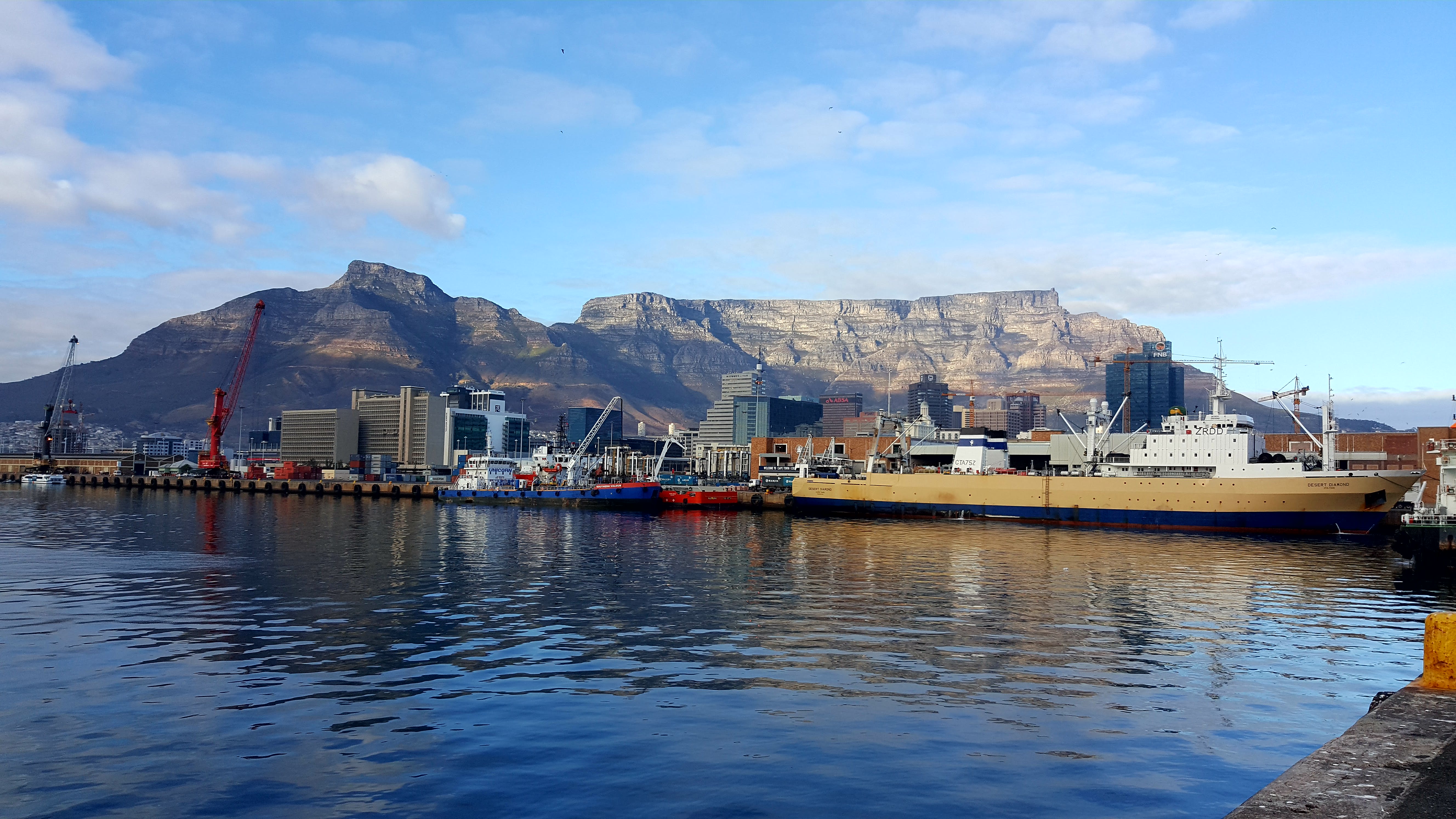
Transport and logistics are one of the highest leverage enablers of inclusive growth. When corridors are congested, unreliable or carbon intensive, the cost of doing business rises for exporters, importers and ultimately consumers. The Logistics Group (TLG) sits at the heart of this challenge and opportunity as one of Southern Africa’s largest integrated logistics providers, offering port-side and back-of-port services across bulk, break-bulk, containers, specialised cargo, liquids, cold chain and warehousing. Its corridor-oriented model provides a single, integrated solution from mine or farm to port, reducing fragmentation and improving reliability for customers that would otherwise coordinate multiple operators.
In March 2022, our team, together with the Mokobela-Shataki consortium completed the acquisition of TLG, financed through a mix of equity and debt. We acquired a 74% stake through our flagship South African IDEAS Fund and AIIF4 Fund, with the remaining 26% held by strategic investment partners sponsored by Moss Ngoasheng of Safika Holdings (Pty) Ltd and Monhla Hlahla, former chief executive of Airports Company South Africa and current chairperson of Royal Bafokeng Holdings.
Our approach combined capital with active asset management to unlock corridor efficiency, scale multi-modal logistics and embed measurable environmental and social performance. The investment created an opportunity to build a multi-corridor platform that addresses regional capacity constraints in partnership with major operators, with a deliberate focus on improving rail and road integration and backhaul efficiency to reduce emissions on the path to net zero.
From port assets to a regional corridor platform
TLG was established in 2019 following the unbundling of Capespan’s logistics division, which was previously owned by Zeder Investments Limited. At acquisition, the core South African operations centered on private port terminals in Cape Town, Gqeberha and Durban, primarily serving fruit and mineral exports. Under our ownership, TLG expanded from a port-facing operator into a diversified integrated logistics platform across seven regional corridors in the SADC region, including Walvis Bay, Saldanha, Durban, Maputo and Nacala (in construction). This expansion increased operating locations from 5 to 14 and enabled a step change in the scale of trade flows supported.
The growth was underpinned by disciplined board oversight, investment grade project evaluation and a consistent corridor thesis: build hard-to-replicate infrastructure that improves reliability, reduces congestion and enables a shift towards rail where feasible.
Corridor interventions with measurable environmental and social benefits
TLG’s most visible impact has come from targeted infrastructure solutions designed to remove friction from high volume trade routes.
At Ressano Garcia, management responded to chronic border congestion that can leave trucks queuing for hours. In partnership with CFM Railways, TLG developed Southern Africa’s first private intermodal road-to-rail terminal with 120,000 tonnes of bulk storage capacity. The terminal enables meaningful modal shift, removing about 115 trucks per day from the corridor and saving an estimated 8-12 hours per journey, with direct emissions benefits from fewer idling vehicles and improved trip efficiency.
At Saldanha, TLG designed a rail siding innovation adjacent to Transnet infrastructure that can accommodate full 125-wagon rakes, unlocking 300,000 tonnes per month of handling capability. This improves access and competitiveness for junior miners while strengthening corridor resilience during periods of volatility and overflow.
In support of agricultural exports, TLG expanded temperature-controlled logistics through a 1,500-pallet cold storage facility in Matola, Mozambique. This reduces time-to-market for citrus exports into Middle East and Far East routes and supports exporters seeking dependable cold chain capacity closer to the port.
These interventions reflect a pattern: AIIM-backed capital expenditure directed at infrastructure and operating models that reduce bottlenecks, improve safety and reliability and lower the emissions intensity of moving goods.
Jobs, inclusion and responsible operations
Employment growth has been a clear developmental outcome. TLG’s workforce grew from 482 employees at the start of the investment period to 845 by December 2024 and 981 by June 2025, alongside the support of more than 2,500 indirect jobs across the wider logistics value chain.
We also embedded a stronger governance and ESG operating model, including ESG committee structures, an Environmental and Social Action Plan and an Environmental and Social Management System to align policies and procedures across the group. Focus areas include strengthening health and safety conditions, reviewing HR policies and systems and evaluating site-specific climate related risks. Inclusion is tracked with clear targets, including progress in female representation from 16% to 19% and a longer-term target range of 25 to 50%, alongside a workforce profile in South Africa that is 81% Historically Disadvantaged South Africans.
Looking ahead
TLG continues to be positioned as a cornerstone regional ports and logistics platform, with ongoing work to enhance terminals and develop corridor capacity in partnership with Transnet National Ports Authority. The strategic intent remains consistent: improve port-to-inland corridor efficiency, enable multi-modal rail and road solutions, reduce transport costs and support higher volumes of trade linked to growth sectors such as critical minerals and agriculture.
Impact highlights
- Jobs supported: 482 employees (Dec 2021) to 845 (Dec 2024) to 981 (Jun 2025)
- Indirect livelihoods: 2,500+ indirect jobs supported across the logistics value chain
- Footprint expansion: 8 operating locations (Dec 2021) to 14 (Dec 2024) across 7 regional logistics corridors
- Road-to-rail shift: 115 trucks per day removed from the Ressano Garcia corridor with 8–12 hours saved per journey
- Border bottleneck addressed: private intermodal terminal built with 120,000 tonnes bulk storage capacity
- Cold chain capacity added: 1,500-pallet cold storage facility developed in Maputo to shorten time-to-market for citrus exports with expansion projects underway in Nacal and Cato Ridge.
- Rail throughput innovation: private siding solution enabling 125-wagon rakes and 300,000 tonnes per month handling capability at Saldanha
- Inclusion progress: female representation improved from 16% to 19% with a 25–50% target range over time, and 81% of the South African workforce is Historically Disadvantaged South Africans (533 employees as at Jun 2025)